Search This Blog

Monday, January 17, 2022

Justice for "Karrayyu Abba Gadaas" were executed by Oromia police

 Six of the jailed members of the Karrayyu Gadaa leadership who were initially said to have gone missing after the unlawful deaths of 14 members of the Karrayyu Gadaa Michilee leaders were released on December 31, 2021 reports said. A survivor of killings, who was later jailed alongside 22 others, for the first time gave  first-hand accounts of the incident that unfolded at Karra, where a prayer ceremony, Waaq Kadhaa was being held on December 1. Weeks after the incident, members of the ruling party accused the Oromia police of having involvement in the execution Karrayyu Abba Gadaas.

“We were unsuspecting when Oromia police arrived and immediately encircled us. We’ve always had a good relationship with government officials,” said the survivor who didn’t want his name to be disclosed for fear of retribution. He recalled, “They provided no explanation as they unexpectedly showed up and began searching homes, looting properties, and confiscating weapons and traditional armaments.”  

“They told us that we were going to die in a few hours. They even asked us to give them our money before we die.”

A survivor of the execution
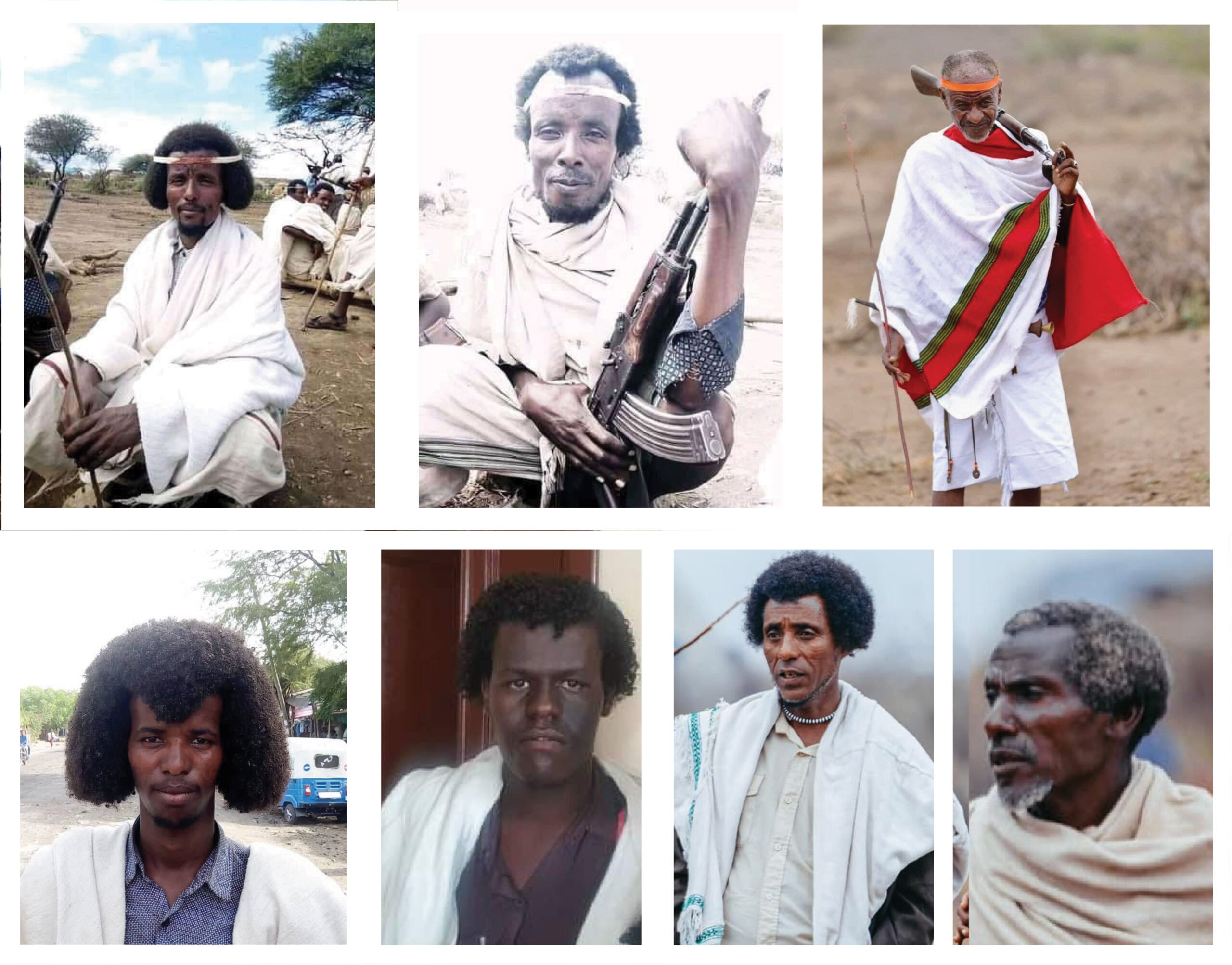
Some of Karrayyu’s Gadda Michille leaders, Councilors and Qallu (Spiritual leaders) who were executed on December 1, 2021


“They told us that we were going to die in a few hours. They even asked us to give them our money before we die.”

A survivor of the execution

“They rounded up 39 of us then loaded us on the cargo bed of a pick-up truck. We trusted that they meant no harm. Soon after, they started threatening us and accusing us of killing their members. We didn’t know what they were talking about. There hadn’t been any violence in our area,” he continued, “They were intimidating us the entire drive. They told us that we were going to die in a few hours. They even asked us to give them our money before we die.” 

The survivor recalled that after we arrived at a remote area, they were asked who among them was from Haro Kersa Kebele. According to him, 16 people were identified and were ordered to lay on the ground face down and shot. “Some of them started beating us while others shot those who were lying down. We were forced back on the cargo bed of the truck,” he said, adding “I was appalled to hear that wild animals scavenged from their bodies for days.” 

Weeks after the incident, members of the ruling party publicly admitted government forces’ involvement in the killings. In a live Facebook video, Hangasa Ibrahim, a member of the House of People’s Representatives accused the head of Oromia police commissions, commissioner Ararsa Merdasa of being behind the killings.  Another government official attributing the killing to government forces is the state minister of peace, Taye Dendea. On his personal Facebook page with over half a million followers, the state minister implied that the Karrayyu Gadaa leaders were killed by elements within the regional government. Repeated attempts to speak with both government officials were unsuccessful. 

The survivor recounted that the remaining people were driven to an area called Sogido where an Oromia Special Forces training camp was located. All the 23 of them were detained in what he describes as a room big enough for two people. “We were met with another round of beatings at the camp. We were beaten until we passed out,” he said.  

On Friday, December 3rd, the detainees were relocated to another detention center. “We were loaded on the back of a truck and ordered to lay down face down so that we couldn’t see where they were taking us. When we arrived somewhere around Mojo, they covered our faces as we got off the back of the truck. We were then locked in a dark room,” he said. He remembers that their detainers registered their names. 

He also spoke of the death of one of the captives, Jilo Borayu Hawas who died on December 8.  “Jilo succumbed to hunger in addition to the beatings. They didn’t take out his body for four nights. We shouted for help for days to no avail. They took his body out on Saturday after the elders found us. They only started giving us food after his death. Some who got too weak from starvation received medical care,” he said.  

The survivor who remains apprehensive of being rearrested warned the Abba Gadaa union of what he called attempts to disfigure the truth. “Politics and Gadaa aren’t the same. We want the union and all Oromos to know our truth.”

Wednesday, January 12, 2022

" We reiterate our call for a thorough and credible investigation into the circumstances and motives behind Haacaaaluu’s cold-blooded murder. " OFC

 Statement from OFC leaders upon their release from wrongful imprisonment

We were released on the 7th of January 2022 after 18 months of wrongful imprisonment. It bears repeating that our arrest and detention in the aftermath of the assassination of the iconic Oromo artist, Haacaaluu Hundeessaa, was motivated by political considerations. It’s also not lost on our jailers that we committed no offense and that we were held unlawfully on bogus charges designed to increase the ruling party’s electoral fortunes. The decision to expunge us from the political space - in the run up to the general elections - was made because the ruling party saw us, our movement, and our causes, as a threat to its grip on power.
A lot has happened in Ethiopia since our forced removal from the political space. The worst possible scenario that we desperately tried to prevent has come to pass. Not only was the hope for a democratic transition totally dashed, the country descended into a regrettable and devastating civil war. From inside our spaces of confinement, we watched in horror the plights of millions of civilians affected by the destructive war and resulting humanitarian catastrophe. As our country teetered on the brink of collapse and the social fabric shattered into pieces, all we could do from our prison cells was weep in anguish and pray for better days. We are particularly appalled and saddened by the atrocities and depredations committed against civilians in Oromia, Tigray, Benishangul Gumuz, Afar, and Amhara states.
It might be too late to undo most of the damage done to the country and its people over the last 13 months. However, we believe there is still a small window of opportunity to prevent further destruction, restore peace through reconciliation, and rebuild the country. It goes without saying that such an arduous task requires a genuine political will and good-faith engagement from all stakeholders.
To that end, we:
- Recognize the government’s recent change of tone towards seeking peace and reconciliation over conflict and confrontation that has dominated its discourse over the last two years. These encouraging promises should be followed by practical and irreversible actions.
- Call on all parties to seek a peaceful and negotiated resolution to the ongoing wars, particularly in Oromia, Benshangul-Gumuz, and Tigray. Until a negotiated, comprehensive ceasefire is achieved, we call on all warring groups to safeguard the safety and protection of civilians, property, and infrastructure.
- Call on all external actors to play a positive role to end the civil war in Ethiopia and facilitate peace and stability in the Horn of Africa region. We implore them to refrain from fuelling the conflict by providing political or material support to any of the warring parties. In particular, countries in the Red Sea area and the wider international community should - with one voice - apply pressure on all parties to sit for a negotiated settlement to end the war.
- Call on the Nations, Nationalities, and People of Ethiopia to resist the ongoing civilian militarization, hate mongering, and unbridled call to arms. We also call on the media to play its part by refraining from broadcasting partisan narratives and fanning hateful propaganda.
- Continue to mourn the loss of the iconic Oromo artist, Haacaaluu Hundeessaa. We reiterate our call for a thorough and credible investigation into the circumstances and motives behind Haacaaaluu’s cold-blooded murder. His family and the public at large deserve to know the truth about who planned, ordered, and carried out such a heinous attack on one of the Oromo nation’s most treasured and prolific artists of this generation. Marred with political interference and cover- ups, the justice system has failed to provide a believable account of what happened the night that Haacaaluu was assassinated - let alone prosecute the perpetrators. We, therefore, call for the establishment of an independent investigative body to uncover the truth.
- Call for the immediate and unconditional release of many of our members and supporters, senior OLF leaders and its members, and thousands of other political prisoners, journalists, activists - including those detained in ethnically targeted raids under the State of Emergency who have not been released.
- Continue to believe war is not a solution to Ethiopia’s complex political crisis. We hope that the events of the past year have made this truism abundantly clear for the majority of political forces in Ethiopia. Only a serious and genuine negotiation and dialogue among nations and nationalities of this country can lead to lasting peace and mutually advantageous coexistence.
Finally, we would like to express our immense gratitude to the entire Oromo nation for their perseverance and tenacity in maintaining our unity and fraternity under conditions of overwhelming adversity; to those who stood by us throughout the awful ordeals of the past 18 months; to our families who cared for us with smile and optimism despite being subjected to regular harassment; our visitors who flocked every day to show their solidarity; to friends and supporters who relentlessly campaigned for our release; our lawyers who defended us passionately and bravely in the face of significant threat to their lives and career. We lack words to express our immense gratitude to the team of volunteer doctors who made regular visits to the Qaliti prison providing us with medical care during our hunger strike and beyond. We are specially indebted to Landmark Hospital and its staff who saved our lives.
We would like to pay a particular tribute to one of our defense attorneys, the late Abduljebar Hussein, a selfless defender of truth and justice who paid the ultimate price in the middle of his tireless effort to establish our innocence and secure our freedom.
Last but not least, it would be remiss of us not to express our appreciation to the federal police officers, and Kaliti prison guards and administrators who treated us with the utmost respect and dignity during our interactions. We sincerely hope the same is extended to all prisoners across the country.
  
52 Comments
311 Shares

Sunday, January 2, 2022

Drones and airstrikes by the Prosperity Party government killed and wounded several civilians in different parts of Oromia.


Drones and airstrikes by the Prosperity Party government killed and wounded

 several civilians in different parts of Oromia.

Press release of the Oromo Liberation Front (OLF) 
The Prosperity Party (PP) has continued intensifying and broadening the war in Oromia and elsewhere in the country. There is no region in Oromia where fighting is not taking place. In this round of offensive, it is being reported that the government is using Drone and Air strikes extensively and civilian casualty very high in many places. The displacement of local villagers and farmers and burning of their harvest and homes have continued across Oromia at an unprecedented level by the PP group and its affiliates such as the Eritrean Army.
In the last couple of days, we have received reports from different parts of Oromia that the PP group has been bombing villages and towns across Oromia using Drones and military airstrikes. Karrayuu area in East Showa, Hararge (in Mieso and Machara area), Gindeberat highlands and lowlands, Salalee, Meettaa Walqixxee, and Kiiramuu areas are the most recent targets of the PP Drones and airstrikes. Reports originating from these localities indicated that these targets were residential areas, and as a result, most of the casualties were civilians. This is not the first time the PP has targeted highly civilian-populated areas by Drones, but it has occurred previously in Wollo and Western Wellega areas. We believe that the PP targets civilians and residential areas in retaliation for not supporting their cynical war.
The OLF strongly condemns PP’s Drone and airstrike operations that target civilians and residential areas. We believe that the PP has committed and continues to commit crimes against humanity. Therefore, the OLF calls upon the international community to investigate these matters independently. We also appeal to the international communities and governments to pressure the PP and its affiliates to immediately halt bombing villages and towns across Oromia where civilians are highly populated.
Once again, we would like to reiterate that the Ethiopians’ multilayered political and human rights demands can only be resolved through truly stopping the war and all-inclusive political discussions and settlements, but surely not through Drones and airstrikes.
Victory to the Masses!
Oromo Liberation Front
January 1, 2022
Finfinnee

Wednesday, December 29, 2021

The Oromo people need Protection, urgently!


The Oromo people need Protection, urgently. As the largest ethnic group the Oromo nation have suffered variations of atrocity crimes perpetrated by successive regimes. Because of their numerical strength and their huge, strategically located, and resource-rich homeland, the Oromo have been seen by the architects of the hegemony as a vast treasure trove of wealth to loot and a strategic anchor for further expansion and predation. Naturally, the Oromo have mounted an epic struggle to resist dictatorship . Times, regimes, circumstances, and fortunes have changed, but the struggle has continued.

Under Abiy Ahmed and his Prosperity Party (PP), the plight of the Oromo has worsened. Initially Abiy’s partially Oromo heritage and his meteoric rise to fame as a man of peace and Nobel Peace Laureate caused many to see a glimmer of hope. But that was not only premature; it was entirely misplaced. PP turned out to be ideal vessels for a new and more lethal variant of fascism.
Currently Oromos collectively face massive, vicious & well-coordinated assault that has the hallmarks of a rare and multi-faceted form of Genocide, ethnically, nationally, and culturally. The all out campaign against Oromo started long before the outbreak of the war in Northern Ethiopia . The Rose Terror, as I described it elsewhere, has ravaged much of Oromia largely in the dark. Oromo politicians, political parties, civic and professional organizations, traditional elders, religious leaders, artists, students, traders, farmers, businessmen, journalists, media outlets, ordinary villagers have been marked for mass incarceration, torture, targeted assassination, or mass slaughter.

Wednesday, December 22, 2021

The mysterious death of a human rights lawyer during political turmoil in Ethiopia

 The civil war in northern Ethiopia has gotten most of the media attention lately. But in the south, the government has launched a huge crackdown against its political adversaries. This is the story of a human rights lawyer, his mystery death and a government fighting for its survival. Here's NPR's Eyder Peralta.

EYDER PERALTA, BYLINE: As Soraya Kadir (ph) explains it, her husband has always been a pain for the Ethiopian government.

SORAYA KADIR: (Through interpreter) He's not afraid. He argues strongly with the government about injustice in the law. He has deep knowledge of the law, and he's a headache for them.

PERALTA: Abduljebar Hussien was one of Ethiopia's most prominent human rights lawyers. No matter who was in power, when an opposition leader was unjustly detained, he took the cases that no one wanted. So when the government of Prime Minister Abiy Ahmed began rounding up politicians in his home region of Oromia, Abduljebar took on the most prominent cases. Soraya says it's also when the threats began - text messages to his phone. And one time, a lady showed up at their house.

KADIR: (Through interpreter) She warned me that he had to stop before death came to my house.

PERALTA: Abduljebar was angry that people he assumed were government agents threatened his family. Soraya heard him shout on the phone, kill me, but leave my family alone.

KADIR: (Through interpreter) He was telling me he is doing the right thing, and he was just working to defend justice and the constitution.

PERALTA: A month later, Soraya received a call from Abduljebar's cellphone. The person who called said her husband had collapsed. Soraya found his lifeless body dumped in a seedy side street. She rushed him to a hospital on a rickshaw.

KADIR: (Through interpreter) They stopped us outside. They didn't let him in, and they didn't even care.

PERALTA: Government officials told her and the Ethiopian public that he died of complications from diabetes. But this happened in August as the country was embroiled in the civil war and as the government rounded up thousands of political dissidents. Soraya knew their story did not add up.

KADIR: (Through interpreter) I never thought that death would come to my house, but it happened. And it is coming to every house. Every house is mourning. We are living in complete darkness.

PERALTA: Prime Minister Abiy Ahmed took power in 2018, following years of protests by Ethiopia's largest ethnic group, the Oromos. They felt marginalized under the authoritarian regime led by ethnic Tigrayans. Abiy, himself an Oromo, promised to respect human rights. But within a couple of years, he went to war against the Tigrayans and broke ranks with many Oromos, some of whom have joined the civil war against Abiy's government.

AWOL ALLO: I think what happened in Oromia is really tragic.

PERALTA: That is Awol Allo, a professor of law at Keele University in the U.K. He says Abiy ended up siding with factions of Ethiopia's second largest ethnic group, the Amharas, who have pushed for a more imperial premiership. As elections drew closer, Awol says that Abiy made a political calculation that in order to win, he had to sideline his political adversaries in Oromia. With opponents in jail or boycotting because of the harassment, Abiy ran essentially unopposed.

ALLO: I think fundamentally what we see with Abiy - that this is someone that is determined to use whatever tactics, whatever strategy is necessary to consolidate his power.

PERALTA: It took a few days and a few changes in meeting places before I finally meet Hamza Mohammed, a prominent Oromo activist. He's a skinny guy with a shy smile. He sinks into his seat almost as if he doesn't want to be seen. He fears he'll be snatched up at any moment.

HAMZA MOHAMMED: I can't leave to - my home. Even I can't work. I can't move in freedom.

PERALTA: Back in June, the government held him for three months, accusing him of smuggling SIM cards into the house of Abiy's top political opponent. Hamza was thrown into the infamous Maikelawi prison. Abiy's government had closed the jail, vowing to end state terrorism. But it's back in use. Hamza says he was held naked in a refrigerated cell.

MOHAMMED: Cold (unintelligible). We don't have any clothes.

PERALTA: When we asked the prime minister's office about these claims. a spokeswoman said we were simply hearing from a few malcontents. But the government's own human rights commission has documented mass indiscriminate arrests of Oromos. It found even children had been detained. Hamza says he's documented a thousand young Oromos under arrest. The worst part, he says, is that he hasn't spoken to his mother for more than a year. He doesn't want the government to trace his calls or go after his mother the way they've gone after his father.

MOHAMMED: My father is jailed over three times in Hararghe. If I post anything on Facebook, they immediately arrested my family, immediately tortured my family.

PERALTA: Hamza hated Ethiopia's previous government. He led acts of civil disobedience against it. But Abiy's Ethiopia, he says, is worse.

MOHAMMED: We're going to war. He's torturing - he's detaining everyone. So this country can't be saved.

(SOUNDBITE OF RUSTLING ON VIDEO)

PERALTA: The video is shaky, but you can see the face of Abduljebar Hussien, a human rights lawyer. The man who took the video and shared it with NPR doesn't want to be named because he fears retribution. Gutema Khalil Buru (ph), a sheikh, was on call at the hospital that day to wash the bodies of the deceased.

GUTEMA KHALIL BURU: When we washed his body, there is government and security that follow us.

PERALTA: That's why the video is shaky - they are trying to film while security agents surround the room. You see Gutema's hands in the video. You see him gingerly removing surgical material.

(SOUNDBITE OF RUSTLING ON VIDEO)

PERALTA: You see that Abduljebar's face is swollen. And then as they turn his head, you see a huge gash in the back of his head.

KHALIL BURU: There are many injuries at the back of his head. (Unintelligible) It's like a knife or something.

PERALTA: Gutema says it took him an hour and a half to wash the blood off his body.

KHALIL BURU: All of us see this person is assassinated.

PERALTA: After he said those words - assassinated - he received so many threats, he had to flee Ethiopia. Abduljebar's wife, Soraya, says as soon as she publicly doubted he died of diabetes, threats came her way, too. Her family warned her, you'll be killed. But what hurts the most, she says, is that a man who gave his life to fight for justice is likely never to get it for himself.

source; Eyder Peralta, NPR News in the Oromia region of Ethiopia.

link;The mysterious death of a human rights lawyer during political turmoil in Ethiopia : NPR

Saturday, December 18, 2021

ABBA GADAA UNION SAYS MISSING MEMBER OF KARRAYYU GADAA LEADERSHIP DEAD, DOZENS UNDER CUSTODY

 ABBA GADAA UNION SAYS MISSING MEMBER OF KARRAYYU GADAA LEADERSHIP DEAD, DOZENS UNDER CUSTODY

The remaining people who were said to have gone missing after the contradicting reports surrounding the killing of 14 members of the Karrayyu Gadaa leadership were found in a detention center in Mojo, reports said. The secretary of Abba Gadaa union and Abba Gadaa of the Tulama, Gobana Hola confirmed that the remaining members of the Karrayyu Gadaa leadership are detained in Mojo and that one of them died. Residents of Fentale woreda spoke of tensions running high as the crackdown on the community escalated over the days following the killings and abduction of the Gadaa leadership.

An eye witness said that government forces abducted a total of 14 men including Abba Gadaas, Abba Boku, prominent community members and young men from the seat of the Gadaa leadership, Karra, where a prayer ceremony, Waaq Kadhaa was taking place on Wednesday December 1, 2021. The Oromia regional government however refuted the allegations and blamed the attacks on Shanee (a term used by government officials to refer to Oromo liberation army, OLA). The OLA on its part issued a statement attributing the attacks to government forces.

Gada Hawas Boru, the brother of the late Karrayyu Abaa Gadaa Kedir Hawas Boru, expressed dismay in the attack on the leaders. He detailed that the Karrayyu community including Abba Gadaas were harassed by government bodies

“WE REJECT THE GOVERNMENT’S REPORT SURROUNDING THE KILLINGS. WE DEMAND A CLEAR INVESTIGATION.”

ABBA GADAA GOBANA HOLA, ABBA GADAA OF THE TULAMA AND SECRETARY OF ABBA GADAA UNION

He also recalled a meeting the Abba Gadaa union held in Adama with officials from the Oromia regional government including the deputy president of Oromia regional state, Awelu Abdo and officials from Oromia tourism bureau where the union condemned the killing of Karrayyu Abba Gadaas. “There are contradicting reports coming out, preventing the union from identifying the perpetrators while different parties trading blames,” he said. 

Moreover, Roba discussed the dire situation that the Karrayyu community is in. He stated that movement has been restricted since the killing of the Abba Gadaas on December 1, discontinuing market activities and preventing the pastoralist community from traveling in search of water and cattle feed. “The people have been subject to harassment and indiscriminate mass imprisonment. Whoever is spotted in urban areas to seek health care or buy goods is beaten and taken to jail.” While putting the number as high as 200 people including women and the elderly, Roba described the conditions of their detention, “It is impossible to visit or bring food to the detainees. A lot of people don’t know whether their loved ones are dead or alive.”