Introduction
 |
A keynote address by Merera Gudina, chairman
of the Oromo Federalist Congress, at the 2016 Oromo
Studies Association (OSA) annual conference. |
I am here today to talk more about ourselves than the regime in power about whom I have been talking for a quarter of a century. I want to share my thoughts with you openly and honestly because I believe we have reached a stage where open, frank and honest discussion are necessary to lead our people towards the ultimate goal of liberation in our long journey to freedom. As we march forward, we should be honest to ourselves and to our people.
Exactly twenty two years ago, I presented a paper on how to democratize multi-ethnic polities like Ethiopia at the International Conference on Ethiopian Studies held at Michigan State University.
I then argued that “Oromos are the best candidate and centrally placed in terms of history, geography and demography to lead the country’s democratization drive. I even further argued that “Oromos can better claim that they are nearer to the Menilek palace at Arat kilo than those who came from Menez yesterday and Adwa today”. Some Oromo nationalists who found my ideas infuriating painted me as if I am playing the role of Gobana of the 19th century. In fact, they accused me of treason against the interest of our people. Undeterred, I continued to do what expected of me as much as I have understood the trends of Oromo politics, Ethiopian politics, African politics and global politics – all of which I had taught at Addis Ababa University for twenty eight years before I was pushed out because of my involvement in national politics.
Over the last quarter century, Oromo activists have grown matured politically. I have also outgrown my views. All of us have transcended our limitations. We find ourselvesin the same boat in the rising tide of Oromo nationalism. Today, Oromo nationalism a rising boat that is able to accommodate all of us. Without going to details many Oromos including Gadaa (Tesfaye) Gebreab have started to write about Merera’s way. It is with this new spirit that I am addressing OSA as a Keynote speaker twenty two years later.
The rise of modern Oromo nationalism
Let me say few things regarding the rise of modern Oromo nationalism and the major turning points thereof. As you might aware, the conjuncture of two episodes: the creation of Matcha and Tulama Association at the centre and the Bale uprising have immensely contributed to the birth of modern Oromo nationalism. They served as the first turning point and/or a great awakening for the Oromos.
To be sure, the Bale uprising has had a major impact not only on the rise of modern Oromo nationalism but also it had an important influence on the Ethiopian Student Movement that brought down Ethiopia’s ancien regime in 1974. I remember in the heydays of the Ethiopian Student Movement abroad: which way to the revolution: the Bale way or the Bole way had been an important question of tactics. The Bale way symbolized the determined militants’ way while the Bole way symbolized the way of softer revolutionaries. EPRP was the best example of the Bale way as it tried to come through Asimba – the replacement for Bale while MEISON represented the softer Bole way. In short the Bale uprising captured the imagination of the militant generation that brought about the 1974 popular revolution.
The second turning point in Oromo nationalism came with the revolution of 1974, which answered the most popular demand of the generation: “land to the tiller” in which Oromos and the rest of the southern peoples benefited most as serfdom and/tenancy was abolished. In fact, without exaggeration the radical land reform of 1975 was what made the Ethiopian revolution a revolution and the single most important victory for the Oromos and the rest of the southern peoples in the last 150 years. In a nutshell, it broke the economic backbone of the Neftegna system –rule by the gun.
Oromo intellectuals of the generation fully supported and implemented the historic “land to the tiller” proclamation. The end of tenancy and Oromos reclaiming of their ancestral land was historic in the sense that it marked the end of the Neftegnasystem – a great leap forward in our people’s march for freedom. It was the answer to the land question, which made the Ethiopian revolution of 1974 a revolution that moved millions of people into making a new history. Sadly, this is the historic gainthat the TPLF is bent on reversing under the guise of development. Under the current drive of land grab – the slogan “land to the tiller” is turned into ‘land to the investors’. That is why the Oromo youth are dying under the slogan “stop the land grab, lafti keenya, lafee keenya”.
Oromo intellectuals of the revolutionary generation failed to use wisely the opportune moment created by the revolution and the land reform. In other words, the second turning point in the history of modern Oromo nationalism had a negative dimension. To be more precise, the division which is still with us today started with the revolution of 1974. The inexperienced Oromo revolutionaries were seriously divided on the way forward. Some opted for socialism, i.e. transformation of Ethiopia as whole while others were attracted to the more radical version of Oromo nationalism and started to fight for the creation of Oromia republic. MEISON symbolized the socialist project while ECHAT – later OLF symbolized the more radical form of Oromo nationalism. Two contradictory slogans subsequently emerged: ‘red Gobena’ ,referring to the Oromo socialists within MEISON and ‘narrow nationalists’, referring to ECHAT and OLF members. The division consigned Oromo revolutionaries of the day into different camps. ECHAT and OLF members had extravagantly used the ‘red Gobana’ tag against the MEISON members while the MEISON members used the same extravagancy in calling ECHAT and OLF members ‘narrow nationalists’. The cost was too high for all of us. Consequently, the cream of that radical generation was decimated in the crisis that followed while some of us who escaped death passed our best years in prison cells – probably more horrible than the present ones.
The third turning point in modern Oromo nationalism came in 1991 when the OLF joined the transitional government controlled by the TPLF and EPRDF. The OLF despite its military weakness was able to mobilize people across Oromia. Millions of people were rallied behind the OLF and it suddenly became a major political force. Moreover, the Oromia region was created and Oromiffa has become a working language in Oromia. In fact, for a brief period of time OLF had become a government within a government in Oromia. And people thought total freedom was around the corner. The TPLF, which was watching the dramatic rise of the OLF very quickly moved to use its OPDO surrogates to crush the OLF. Despite its far less impressive military performance, the OLF has survived the TPLF’s military machine and has become the spirit of Oromo nationalism. I don’t remember how many times the EPRDF regime declared the OLF is dead in the last twenty five years and accuse the next day the OLF is being behind this or that incident and round up many young Oromos as terrorists. In other words, although militarily less effective, the OLF has shown a remarkable capacity to survive.
All along the EPRDF has been using its illegitimate child (Diqala) to rule the Oromia region by the use of sheer force and the consequent confrontation between the OLF and the Ethiopian regime has been too costly for the OLF and the Oromo people at large. However, a good thing here is that the rising tide of Oromo nationalism has persisted with its ups and downs and the regime could not fully suppress it.
In the meantime as Oromo resistance has continued, the Oromo National Congress was created in 1996. It made a good showing in the 2005 elections. Moreover, it has become yet another alternative in the Oromo people’s quest for freedom and democracy. It also opened yet another front in the struggle by using the legal platform created by the regime for donors’ consumption. It also survived the regime’s political surgery following the 2005 elections and five years later merged with another Oromo legal organization – the Oromo Federalist Democratic Movement (OFDM) and formed the Oromo Federalist Congress (OFC). The merger helped the unity of our people and enhanced our capacity to lead the struggle at home. Needless to add the rise of ONC/OFC brought back the Oromo dilemma: which way to the liberation of the Oromos? Needless to add the resolution of this dilemma is extremely important for the future of our people in its quest for freedom & democracy. We are yet to learn how to work with each other and our neighbors for a common national interest.
The Oromo Protest
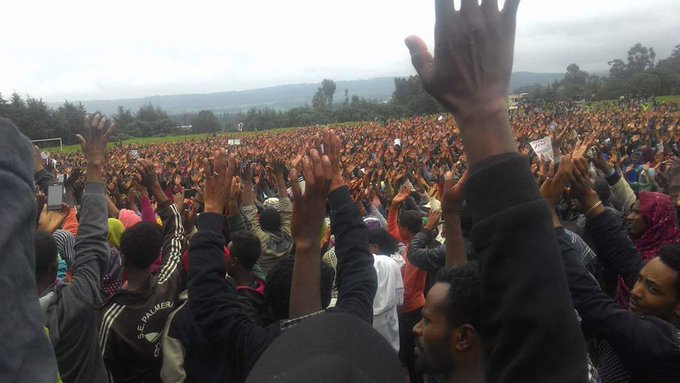
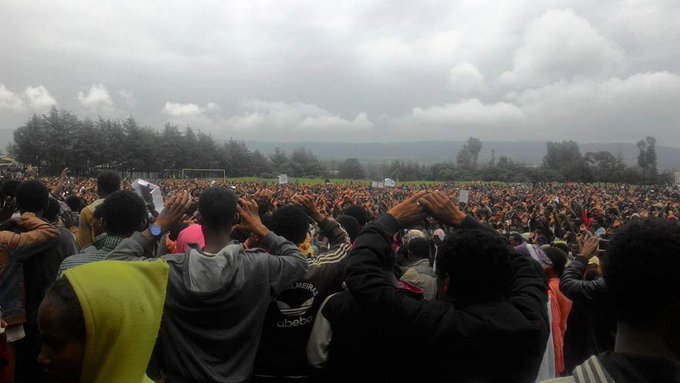
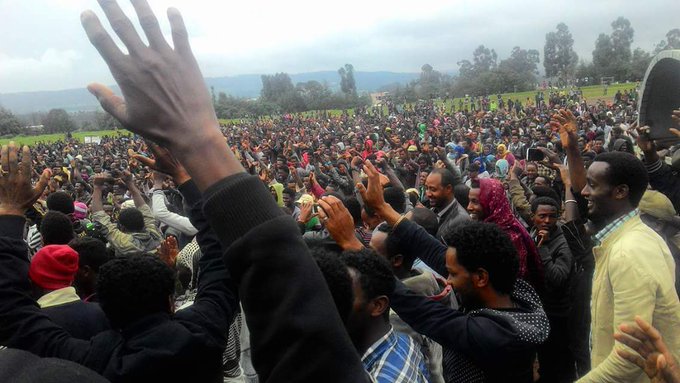
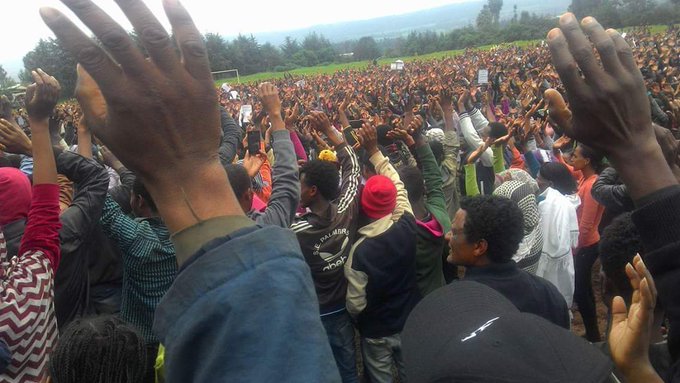
The fourth turning point in the history of modern Oromo nationalism is the Oromo protest. To be sure, the 2014 Oromo protest in which about 78 people, mostly young people were killed, has been a precursor for the current protest, which is much more strong, wide spread and a mortal threat to the regime. Several factors contributed to the outbreak of the protest. Here, it is important to note that although it is difficult to apportion credits – as most Oromo organizations including the OPDO have contributed at different levels and arguably for different interest.interest. The OMN has done marvelous job in bringing the protest to the world stage. Oromo artists have also been at the forefront of the struggle – people like Haachaaluu Hundeesa, ChalaBultum, MuluBekele, Gelana, JamboJotie, etc. moved millions for the struggle by their appealing songs.
As you all know, the causes of the protests are many: chief of which are the historical marginalization of the Oromos as well as the continued marginalization, the dangerously growing corruption, maladministration and the discrimination thereof, the existence of the OPDO as a wound in Oromo nationalism, youth unemployment, etc; while the extensive land grab and the displacement thereof is a triggering factor. In a nutshell, the Oromo people as a whole and the youth in particular have been fed up with regime that successfully failed to promise them a better future.
Without minimizing the role of other Oromo organizations let me briefly tell you the contribution of the Oromo Federalist Congress to the on-going struggle. Our most important contribution has been the most effective campaign we were able to conduct during the 2015 elections. And thanks to the support of the Oromo Diaspora, we were able to organize a campaign that moved millions across Oromia. We could field more than ten land cruisers armed with loud speakers more for than two months. We were able to conduct street to street campaigns, organize mass rallies as high as 80 – 100,000 and distributed more than 3 million fliers containing clear messages to the youth, the farmers, the OPDOs as well as the security personnel in Oromia. I recall a police man who wept at our rally in Ambo when I said “you were born to an Oromo family, brought up by Oromo’s milk, when you die it is Oromo’s who will give you a decent burial, don’t kill your brothers and sisters to serve the interest of others”.
The inspiring mass rallies we had in Arsi, especially in Shashamane, Dodolla, Karsa and Shalla; the public meetings we had in Adama and Ciro stadiums; the rallies of fearless youth in KarsaMalima, South-west Shewa; the rallies we had in Hollota, Ginchi, Jaldu and Gindeberet, the turnout we got in Ambo, Guder, Gedo, MedaKegn, Bako, Shamboo, Nekempt, Gimhbi and Dembi Dollo, our rally in Bule Hora and finally the horses of Tikur-Inchini were all memorable rallies which taken together moved millions, especially the Oromo youth. In the 3 million fliers we distributed and in the mass rallies we organized our messages were loud and clear: they include “stop land grab, stop robbing the resources of our people, stop repression, stop discrimination, etc.”
We also promised lower taxation, lower fertilizer price and selected seeds and above all equal opportunity for employment and making Oromiffa the national language of the country alongside Amharic. Of course the creation of true federalism and democratic governance –i.e. genuine shared-rule and self-rule were at the centre of our campaign messages. In fact, the OPDOs were carrying bags of money to buy the votes of our people while our strategy was to mobilize people to the maximum of our capacity. By doing so we were able to expose the crimes of the TPLF/EPRDF regime to the full. I think, millions of Oromo youth we moved during the elections have taken their lessons seriously and applied their knowledge in the on-going struggle.
Moreover, after the elections when the OPDO brought back the Master Plan through the back door– we immediately called a public meeting at our office – under the slogan “stop the land grab and/or laftikenya, lafekenya”. And We called all Oromos to oppose the new land grab after the land reform of 1975. In fact, we compared the new land grab to the imperial days of land grab. I think, this immensely contributed to the resistance that followed.
Without exaggeration, the protest not only has become the fourth turning point in modern Oromo nationalism, it helped Oromos to make a great leap forward to the ultimate goal of liberation. Furthermore, it brought respect for Oromos both from their neighbors and the international community. Western diplomats and journalists most of whom might have never heard about Oromos crisscrossed Oromia to gauge the level and depth of Oromo protest. Oromos are suddenly recognized “Ethiopia’s largest ethnic group”. The protest has become the reminiscent of the Gada warriors of the 16th century and Oromos suddenly found new faith in themselves and started to believe that liberation is in their owns hands and within reach. I myself who have seen the revolutionary upheaval of 1974 and the overthrow of the military regime in 1991 was surprised when millions moved into action across the vast land of Oromia in a very short period of time.
As I said earlier, for the first time in Oromo history foreign diplomats, parliamentarians and journalists roamed the Oromo streets to understand the cause and the depth of Oromo protests. I remember what one day a young Dutch scholar asked me. She said to me “I am going to Ginchi and should I take a tablet for malaria?”. I told her “Ginchi is in a high land area and no need for it and asked her what you do there?”. With force she said “I want to see with my own eyes, the birth place of Oromo protest”. In summary, the Oromo youth have shown us the path to liberation with their blood by crossing the organizational divides and acting in unity as a result of which both our neighbors and the international community started to respect us as a people. Furthermore, it has opened a new chapter in the Oromo people’s struggle for freedom and democracy, which is a great leap forward – at that a new turning point. I dare say, Ethiopia will never be the same again. The protest has shown us what a united & determined people can achieve in the face of various challenges.
Every media outlet from American presses to BBC – to French Radio International and Aljazeera talked to us and covered the protests that were taking place even in the remote Oromia villages. Every western diplomat based in Addis talked to us. I remember American. British, Dutch, Swedish, German, Norway as well as the European Union parliamentarians discussing with us regarding the dimension and direction of the Oromo protest. The Oromos, who have been forgotten by the world powers, suddenly become the centre of their attention.
Reasons as to why non-Oromos are not attracted to join the Oromo protest until now may be many, but we can single out two main factors: one is what all of you know – fear of the Oromo separation agenda from many quarters. The other is what many people have not fully grasped – Oromos now have two political forces that have real life among the Oromo people – the OLF and OFC There are no comparable political groups in other regional states. Despite its weakness as an organization, the OLF has always been there to inspire the Oromo youth. Since 2005 the ONC – now the OFC has been using to the extent possible the legal platform.
Thanks to the support of the Diaspora including OMN, OFC was able to move millions of Oromo youth across the vast land of Oromia. In a nutshell, there is no political party that could capture the imagination of the youth in other regions of Ethiopia. To make my points clearer, if they had the capacity to do it, more than the solidarity, they could have joined the struggle with their own demands as they have plenty of them from Walkeit to the sale of land to the Sudan – to political repression and youth unemployment. To me understanding such differences is very important to plan for the future struggle.
The third important difference is that Oromo nationalism has passed the stage where Oromo quislings or traitors could not easily control. Surprisingly, more than three million OPDO members could not resist the rising tide of Oromo nationalism: some quickly gave in; some joined the popular uprising while some die-hards tried to stop the forward march of history. The Amhara youth have not reached that stage and the hodam Amharas still in control of the situation. To be sure, the Amhara mobilization is much stronger in the Diaspora while in the case of the Oromo – mobilization in the home front – especially that of the youth is much more united and stronger than abroad. The fourth difference is – the Diaspora Oromo activists are more connected to the grass root in the home front and hence have got much more influence over the youth at home. For all practical purposes the youth at home look at people like Jawar as their commander in-chief in their war against the regime. I don’t see comparable influence in the case of Amhara youth.
The dilemma over the road map to liberation and Our Chronic Division
The Arab world’s most known journalist, Mohammad Hykal, who had been very angry at the division of the Arab leaders once said “the Arab leaders met, agreed to disagree”. This is what has become the culture of Oromo political leaders for more than a generation. Let us admit that Oromo political parties are yet to learn how to aggregate their interest to work for a win – win situation by developing the art of compromise in our politics. The same applies to the larger Ethiopia. In addition to learning the art of compromise – to reach our ultimate goal, unity of purpose and action should be our guiding principle. We should be able to differentiate between the role of liberation movements and political parties struggling for power in a normal situation. We need to talk to each other, not over each other; we should stop dialogue of the deaf and listen to each other. Especially, we should know the consequences of our actions.
One of the most serious setbacks/we even can call it a disease of Oromo movements and/or political leadership is their failure to handle political differences and easily jumping to character assassinations of all kinds, especially when old friends take different political positions. Far worse, the blind followers easily follow the words of their superiors and jump to attack the new enemy they have created. I think the solution for this is to openly and honestly debate over our differences as well as on the way forward without demonizing each other. I believe internal democracy is necessary to tackle real political differences. Yet another serious problem in Oromo political organizations is lack of political dynamism both in our thinking and actions. And because of fear of each other, it takes years for Oromo political leaders to adopt new policies even when the reality on the ground demand quick action and moving fast.
Frankly speaking, because of our weakness, we could not produce a strong leader like the Eritreans or a collective leadership like the TPLF until Meles pushed aside the rest of his comrades to emerge as a sole dictator. We are also not good at establishing better cooperation with our neighbors and minimize our enemies. We really need to create real alliances that help us to move forward. I hope we understand even the mighty America creates both tactical and strategic alliances across the globe to promote its interests.
Sadly and surprisingly, the war over the internet has continued among Oromo political forces even at a point in time when the Oromo youth is writing a new history with their blood. No less surprising, I heard some even suggesting that there is no need for political organizations and the dispersed movement alone could do the job. To be sure, as much as I have understood both national and global politics – beyond a shadow of doubt, more than any point in time in the history of Oromo people’s struggle, our people need organization/organizations that can lead them across the finishing line to victory. To suggest otherwise is disarming our people and sabotaging their victory. Probably the suggestion may come out of political naiveties or frustration with existing organizations.
Whatever its sources, it is a self-defeating suggestion for which Oromos may pay very dearly. In this regard, all Oromos cannot be policy makers and while we reserve our right to oppose or support any Oromo organization, we should be careful in innocently selling the strategy of the enemy to our people as no people succeeded without leadership in modern history.
In our division, the worst and costly division is which came to us through the OPDOs. Originally the OPDOs were forced to join the wrong side of history as prisoners of war. Later most of them joined the wrong side of history willingly for their stomachs. Surprisingly, when OPDOs recruit members, they never, never, never talk about the cause of the Oromo people as they fully know they are not there to promote the cause of their people. In the Diaspora they always say “come and get the land for free” while at home they say “you get land, employment and/ or become an official to live good life”. Here, let me narrate to you my own experience.
A friend of mine, the elder brother of Hassan Ali (former president of the Oromia region), who then just joined the government asked me to join the OPDO. He told me that the OPDO was ordered to nominate nine Muslims and nine Christians as a quota to high office. I think they could not do that easily as many Oromo intellectuals were then supporters of the OLF. When he understood, I was not attracted to the lucrative high office, he said to me that “manas, makinashinargetajedheni” (i.e. I thought you can get a house, a car). This is the way millions of Oromos have joined the OPDOs and to use the words of Walter Rodney – the West Indies historian – “removed from history”. I think, we have a real challenge to bring them back to history these lost children of Oromia – by liberating them both from their stomachs and their masters.
The good thing is the Oromo protest has shown us is that the more than three million OPDO members – either because of their isolation, confusion or some level of Oromo nationalism retained in them – they could not stop the protest and the government had to send in its Agazi force and the federal police known for their notoriety to suppress the protest by sheer force.
The Challenges to our Intellectuals
Oromo intellectuals have developed a very bad culture of criticizing others by expecting from them miracles than taking practical actions themselves. Far worse, jealously (masanuma) has become a whole mark of our political culture. Oromo youth at home have broken it with their blood and it is high time that Oromo intellectuals and political leaders do the same to move forward. And whatever the source of the problem, this is yet our common disease we should overcome as quickly as possible.